
By: Billie J Olson l We are Local
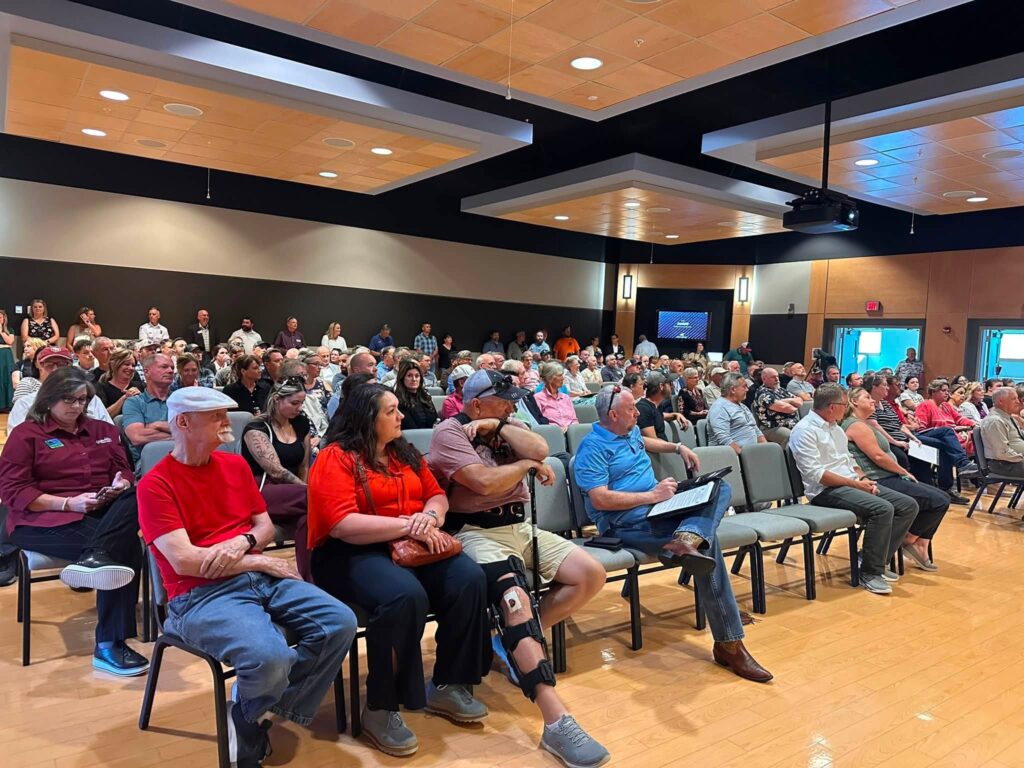
GREAT FALLS, MT — Great Falls Development Alliance and Janicki Industries leadership hosted a packed community town hall at Great Falls College MSU’s Heritage Hall, offering local residents a comprehensive look at the company’s culture, technological capabilities, and long-term integration strategy ahead of the official groundbreaking ceremony at the AgriTech Park.
The massive $800 million aerospace and engineering expansion is projected to establish a 1.6 million-square-foot production footprint on 180 acres, injecting roughly 2,000 high-tech jobs directly into the local economy over the next decade.
Janicki Leadership Introduces the Project
Opening the floor, Janicki team member Nick Lavacca, Community and Educational Outreach Manager at Janicki Industries, introduced key members of the executive leadership team spearheading the expansion, including Kerry Kron (Executive Vice President of Human Resources), Jordan Weber (Chief Talent Officer), Lou Daley (Executive Vice President), and Tim Babcock (Vice President of Operations).
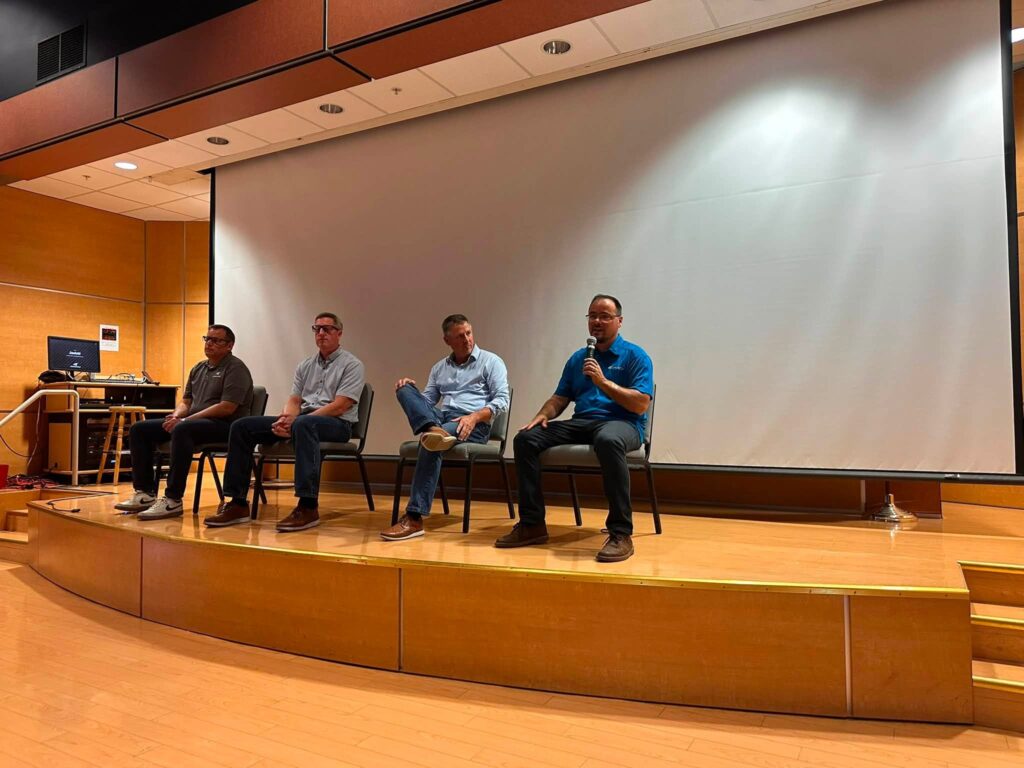
Babcock, a veteran who began with Janicki in 1998 spraying parts and performing manual putty work, will oversee regional operations for the Montana expansion alongside the company’s existing facilities.
Lavacca noted that Janicki’s family-centered culture aligns naturally with the welcoming spirit of Great Falls, a community that closely mirrors the company’s roots in Sedro-Woolley, Washington.
The World’s Most Advanced Machining Center
While the overall master plan spans multiple buildings over a ten-year period, leadership revealed that Phase 1 will center on a 250,000-square-foot precision machining facility designed to employ approximately 500 people across a wide range of skill levels.
Executive Vice President Lou Daley, a former U.S. Army machinist with more than 35 years in advanced manufacturing, said he has been mentally designing a facility like this throughout his career.
A New Generation of Aerospace Manufacturing
Janicki Industries clarified that its new Great Falls manufacturing campus will operate far beyond the capabilities of a traditional machine shop.
Built as a next-generation, model-based, digitally controlled manufacturing environment, the facility will utilize proprietary five-axis milling machines designed and built entirely in-house. These massive machines, capable of machining components up to 20 feet wide and 100 feet long, will transform raw aluminum, titanium, and advanced composite materials into critical aerospace structures, including wing spars and flight-ready subassemblies.
Advanced Manufacturing Technologies
The workflows will introduce several cutting-edge manufacturing disciplines to Montana, including:
- Exotic Alloy Machining: Precision milling of dense materials such as Inconel, a nickel-based alloy designed to withstand the extreme temperatures found in aerospace applications.
- Advanced Composite Fabrication: Layering advanced “pre-preg” carbon fiber materials infused with reactive epoxy resins and stored at sub-zero temperatures before use.
- Industrial Autoclaves: Curing composite components inside massive 18-foot-diameter nitrogen-powered pressure chambers that bond resins into the fibers, creating lighter and stronger flight components.
Precision Quality Control
To safeguard these high-stakes components, Janicki will implement extensive Non-Destructive Inspection (NDI) testing.
Using ultrasonic inspection, X-ray technology, and magnetic particle testing, technicians will examine every quarter-inch of each component to identify structural voids or Foreign Object Debris (FOD).
Because aerospace tolerances are measured to within two-thousandths of an inch—roughly one-third the width of a human hair—strict quality oversight is essential to ensure flight safety.
Building One Team
Addressing a question about the historic divide between engineers and production workers, Daley acknowledged that Janicki experienced similar challenges years ago.
To eliminate that divide, the company built a “One Team” philosophy into its culture. Today, engineers work directly on the production floor instead of separate corporate offices, while production employees participate alongside engineers during design reviews and project planning.
Leading by Example
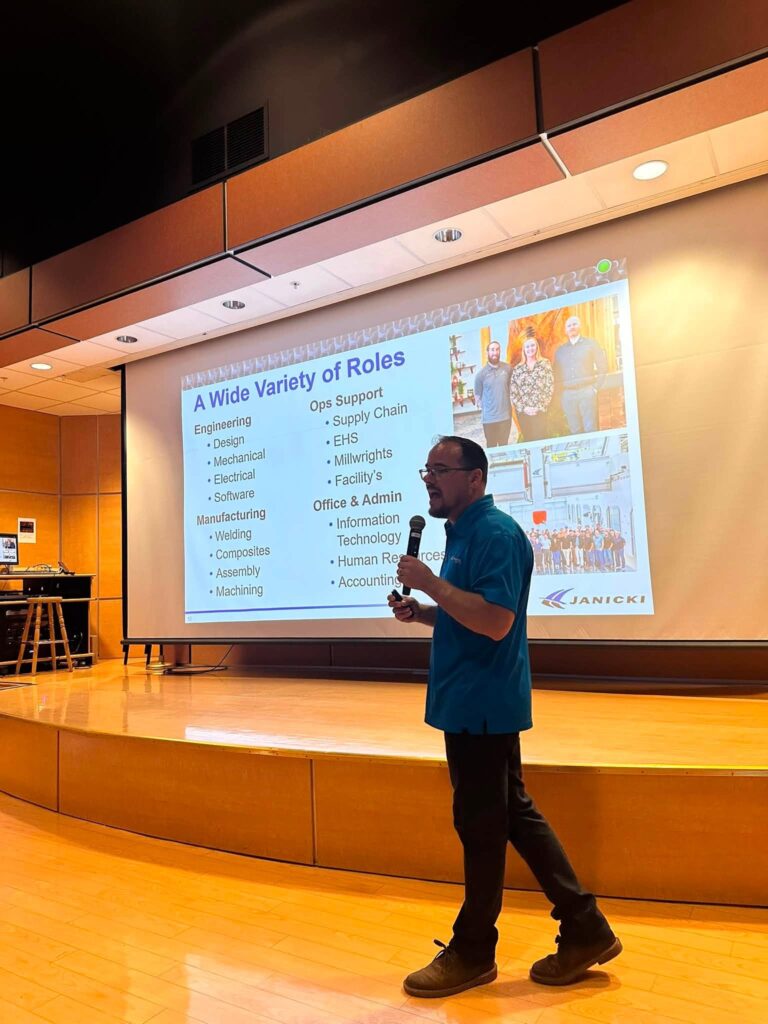
Lavacca shared one example that demonstrated the company’s culture during the COVID-19 pandemic.
When engineers developed an intensive decontamination process that required full-body Tyvek suits and respirators, Vice President Tim Babcock and Lou Daley were the first to put on protective equipment and work alongside production employees to sanitize the facility.
Janicki’s Core Values
This servant-leadership philosophy forms the foundation of Janicki’s 12 core values, displayed throughout its facilities.
Among those values are “Be Kind,” encouraging calculated risk-taking to foster innovation, and “No Drama,” emphasizing professionalism and teamwork.
Leadership said these principles have helped the company maintain a positive culture even while experiencing rapid national growth.
Today, Janicki has grown from 918 employees in 2022 to more than 2,100 employees nationwide.
Protecting the Missouri River
Environmental stewardship was another major topic during the evening.
Responding to a question from a lifelong Great Falls resident, Daley assured attendees that Janicki is committed to protecting the Missouri River and the surrounding environment.
He pointed to the company’s Hamilton, Washington, facility, located along the environmentally sensitive Skagit River, as an example of its long-standing environmental commitment.
Environmental Stewardship
Janicki maintains a full-time Environmental Health and Safety (EHS) division responsible for meeting strict air and water quality standards.
Company leaders explained that fabrication occurs within closed systems designed to eliminate emissions.
They also clarified that the previously discussed 5.2-million-gallon water estimate reflects the total construction and facility demand over the entire development timeline—not ongoing daily operations.
Officials added that the facility does not discharge industrial chemical waste into local waterways. Advanced stormwater collection and filtration systems are designed to capture, filter, and manage rainwater before it reenters the municipal drainage system.
Community Growth and Infrastructure
Representatives from the Great Falls Development Authority (GFDA) said Janicki’s investment has already encouraged additional housing development throughout the community.
Leadership also noted that Janicki is working closely with the Montana Department of Transportation to address future traffic needs as the project moves forward.
Investing in Montana’s Workforce
Janicki’s long-term workforce strategy focuses on developing employees from within.
The company offers up to $5,000 annually in tuition assistance, helping employees continue their education while advancing into leadership, engineering, and technical careers.
Company leaders said this approach creates long-term career opportunities that often span multiple generations within the same family.
Training the Next Generation
To build that workforce, Janicki actively partners with local schools.
While federal regulations require employees to be at least 16 years old to work in production areas, the company introduces elementary and middle school students to advanced manufacturing through classroom presentations.
High school students can participate in two-month rotational programs that expose them to machining, composites, engineering, metrology, quality control, and other aspects of aerospace manufacturing before choosing a career path.
Building Montana’s Future Workforce
Janicki is also partnering with Great Falls College MSU, Montana State University, Montana Tech, and regional education leaders to align workforce training with future manufacturing needs.
The company plans to involve college students in engineering capstone projects and senior design programs while helping shape technical education across Montana.
What’s Next for Great Falls
Although Janicki continues expanding across Washington and Utah, company leaders emphasized that their attention is now focused on Montana.
Construction Begins
Crews are preparing to tackle one of Great Falls’ best-known construction challenges—the area’s heavy clay soils.
General contractor Chad Fisher Construction, which has worked with the Janicki family for more than 50 years, will rely on Montana subcontractors for excavation, concrete, masonry, and structural framing throughout the project.
Opportunities for Local Businesses
Janicki encouraged local businesses, suppliers, and entrepreneurs interested in working with the company to submit capability statements through the Montana information portal on the company’s website.
Supply chain representatives will also be available during upcoming groundbreaking events to meet directly with prospective Montana vendors.